Timing belts are crucial components in conveyor belt systems and other machinery. They ensure precise synchronisation between the moving parts of many machines. In addition, their reliability and efficiency make them indispensable in industrial applications.
How Timing Belts Work
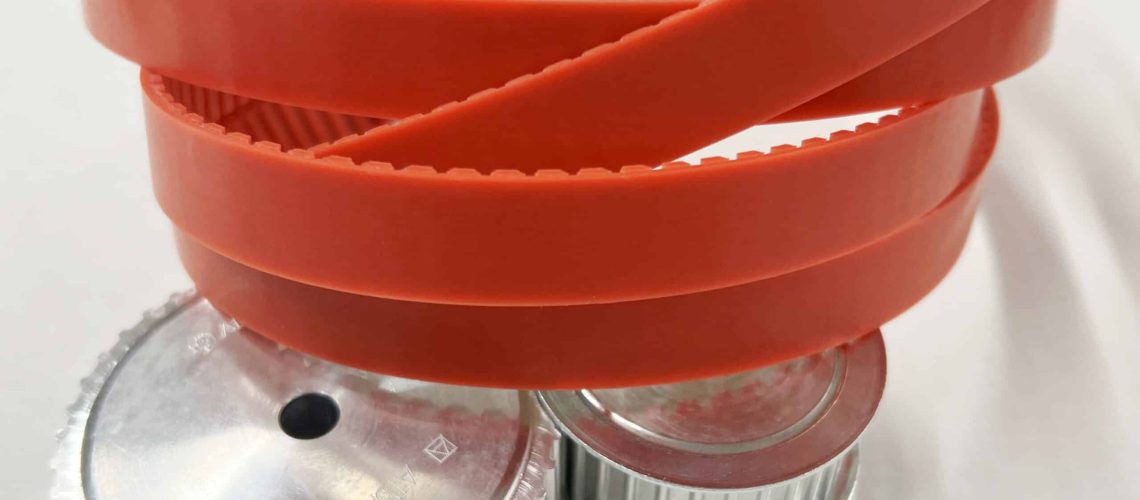
Timing belts are made of durable materials with teeth on the inner surface that align perfectly with corresponding grooves on pulleys. In particular, these teeth are designed to prevent slippage. They also ensure precise synchronisation between mechanical components. As a result, this enables a smooth operation.
Materials and Durability
Timing belts are commonly manufactured from:
– Reinforced Rubber: Provides flexibility and resilience.
– Fibreglass or Kevlar: Enhanced tensile strength and resistance to stretching.
– Polyurethane: Offers durability and resistance to chemicals and wear.
These materials ensure that timing belts can endure the demanding environments of industrial machinery, including extreme temperatures. Furthermore, they can withstand lack of down time & exposure to chemicals.
Why Timing Belts Matter
From cars to a wide range of industrial machinery they play a vital role in the performance of the machines they’re in. Consequently, a well-maintained belt ensures smooth operation. It also reduces energy consumption. Additionally, it can prevent mechanical failures.
By understanding the function, materials, and maintenance requirements of timing belts, operators can optimise performance. They can also reduce downtime in their machinery.
Timing Belt Issues
Despite their durable construction, timing belts will be worn over time due to usage. Common issues include:
– Cracking: Often caused by prolonged exposure to extreme temperatures.
– Fraying: A result of misalignment or poor tensioning.
– Tooth Wear: Occurs when the teeth of the belt degrade, leading to reduced precision.
– Glazing: A polished surface that will diminish grip and efficiency.
Unchecked wear can lead to belt failure, causing unscheduled downtime and costly repairs. This is why they are usually bought in quantities. Doing so helps to minimise as much down time as possible.
When it is time to order your Timing Belts, please check our shop on our website.
Timing Belt Maintenance and Replacement
Proper maintenance is essential to ensure they perform efficiently and have a long service life. Key tips include:
– Regular Inspections: Check for any sign of wear, such as cracks, fraying, or tooth damage.
– Correct Tensioning: Avoid excessive tightness which can create damage. Also, avoid too slack which would allow the belt to slip.
– Alignment Checks: This will keep all the moving parts operating as they should. It will also prevent any incorrect movements.
– Scheduled Replacement: Replace belts according to manufacturer guidelines or earlier if significant wear is detected.
Implementing these practices minimises the risk of unexpected breakdowns. At the same time, it extends the belt’s lifespan.
Have any enquiries? Please head over to our contact us page and submit a request, one of our sales team will get back to your enquiry ASAP.