The Ultimate Guide to Plastic Modular Belting: Revolutionizing Industrial Conveyance
Why Modern Industries are Turning to Plastic Modular Belts Modern manufacturing and processing environments face persistent challenges in

This guide explains what heat shrink tunnel curtain material is, how manufacturers produce it, and why we at Techbelt supply it in standard and cut-to-size formats to suit industrial heat tunnel applications.
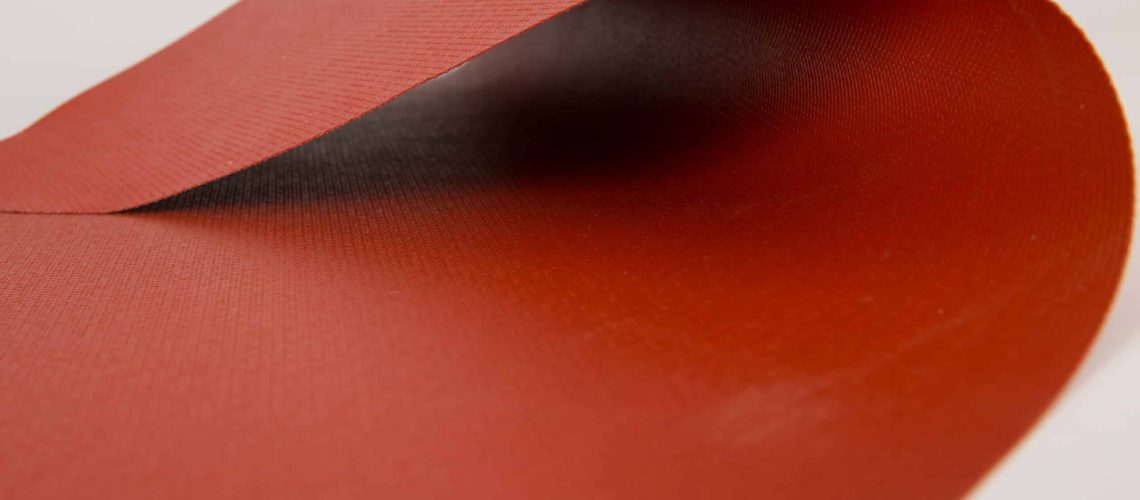
Heat shrink tunnel curtain material is a specialised industrial fabric designed for high-temperature thermal environments, most notably heat shrink tunnels and enclosed thermal chambers. At its core, the material combines woven glass fibre cloth with a durable silicone coating. Together, these components create a composite that delivers both mechanical stability and reliable heat performance.
First, the woven glass fibre cloth provides structural strength and dimensional stability. It resists distortion under heat and maintains its form during continuous operation. Next, the silicone coating adds a non-stick, heat-resistant surface. This coating actively resists abrasion and chemical exposure while allowing wrapped products to move through a tunnel without adhesion issues. As a result, the material performs particularly well in packaging environments where shrink films soften or become tacky under heat.
Our specification confirms that silicone coated glass fabrics withstand continuous temperatures of up to approximately 230 °C (446 °F). In addition, the coating delivers strong release properties, abrasion resistance, and chemical stability. At the same time, the silicone layer improves moisture resistance and dielectric performance, making the fabric suitable for demanding industrial conditions.
Performance always starts with construction. Therefore, understanding how this material is made explains why it performs reliably in heat shrink tunnel environments.
Step 1: Woven Glass Cloth
Manufacturers begin with fibreglass yarns, commonly woven in a fabric style known as 7628. Before weaving, the yarns receive a sizing treatment, typically polyester-based. This treatment improves handling during weaving and ensures consistent yarn cohesion.
Once woven, the glass fibre structure forms a stable fabric matrix. This matrix delivers inherent tensile strength, dimensional control, and baseline thermal resistance. As a result, the fabric provides a reliable foundation for the coating process that follows.
Step 2: Silicone Coating Application
After weaving, the glass cloth moves into the coating stage. During this stage, the fabric passes beneath a fixed-gap blade while a silicone compound in semi-liquid form applies evenly across the surface. As the fabric advances, the blade controls coating thickness and consistency.
Next, the coated fabric enters a curing oven. Heat within the oven crosslinks the silicone, bonding it permanently to the glass substrate. This curing process stabilises the composite structure and prepares the material for continuous high-temperature use.
Through this method, manufacturers produce a uniform, flexible sheet with a silicone layer firmly anchored to the glass cloth. Consequently, the finished fabric tolerates repeated heating and cooling cycles without rapid degradation or loss of performance.
To select the right curtain material, you need to understand how each property supports real-world performance.
Silicone coated glass fabric performs consistently at continuous operating temperatures up to approximately 232 °C. This temperature range covers the majority of industrial heat shrink tunnel applications. Importantly, the material maintains bond strength and structural integrity through repeated thermal cycles, which reduces downtime and replacement frequency.
Equally important, the silicone coating provides a naturally non-stick surface. In heat shrink tunnels, plastic films often soften as temperatures rise. Without a release surface, these films can adhere to surrounding materials and disrupt production.
By contrast, the silicone surface prevents sticking. Film contacts the curtain material and passes through cleanly. As a result, operators experience fewer tears, fewer jams, and more consistent throughput.
In addition to release performance, the fabric actively supports thermal efficiency. The combination of coating and weave helps retain heat within the tunnel or chamber. This retention stabilises internal temperatures and supports uniform shrink results across products.
Furthermore, effective curtains reduce heat loss at tunnel entry and exit points. Consequently, energy efficiency improves while process consistency increases.
Silicone inherently resists many chemicals and vapours commonly found in industrial environments. Therefore, this curtain material performs well in packaging lines where exposure to residues or cleaning agents occurs.
At the same time, the coating resists abrasion. This resistance extends service life, even in applications involving frequent contact, movement, or vibration.
Although similar fabrics appear across many industries, heat shrink tunnel curtains and thermal chamber curtains remain the primary applications for this material.
In packaging operations, products pass through a heated tunnel after shrink film application. The heat tightens the film around the product, creating a secure and professional finish. Curtains made from silicone coated glass fabric help contain heat at the tunnel entrance and exit, which stabilises internal temperatures.
In addition, the non-stick surface reduces film adhesion to the curtain itself. As a result, production runs more smoothly and reliably.
Beyond shrink tunnels, operators also use this material in:
Thermal curtains for ovens and dryers
Release and separator sheets in manufacturing
Conveyor belts and high-temperature liners
Safety curtains or heat retention barriers in industrial furnaces
Across these uses, the material consistently delivers strength, thermal stability, and reliable release performance.
At Techbelt, we stock heat shrink tunnel curtain material in standard widths of 1000 mm and 500 mm. We supply the material by the running metre, which allows flexible ordering for both replacement and new installations.
In addition, we offer a full cut-to-size service. This option ensures accurate fit to your specific machine dimensions or tunnel configuration.
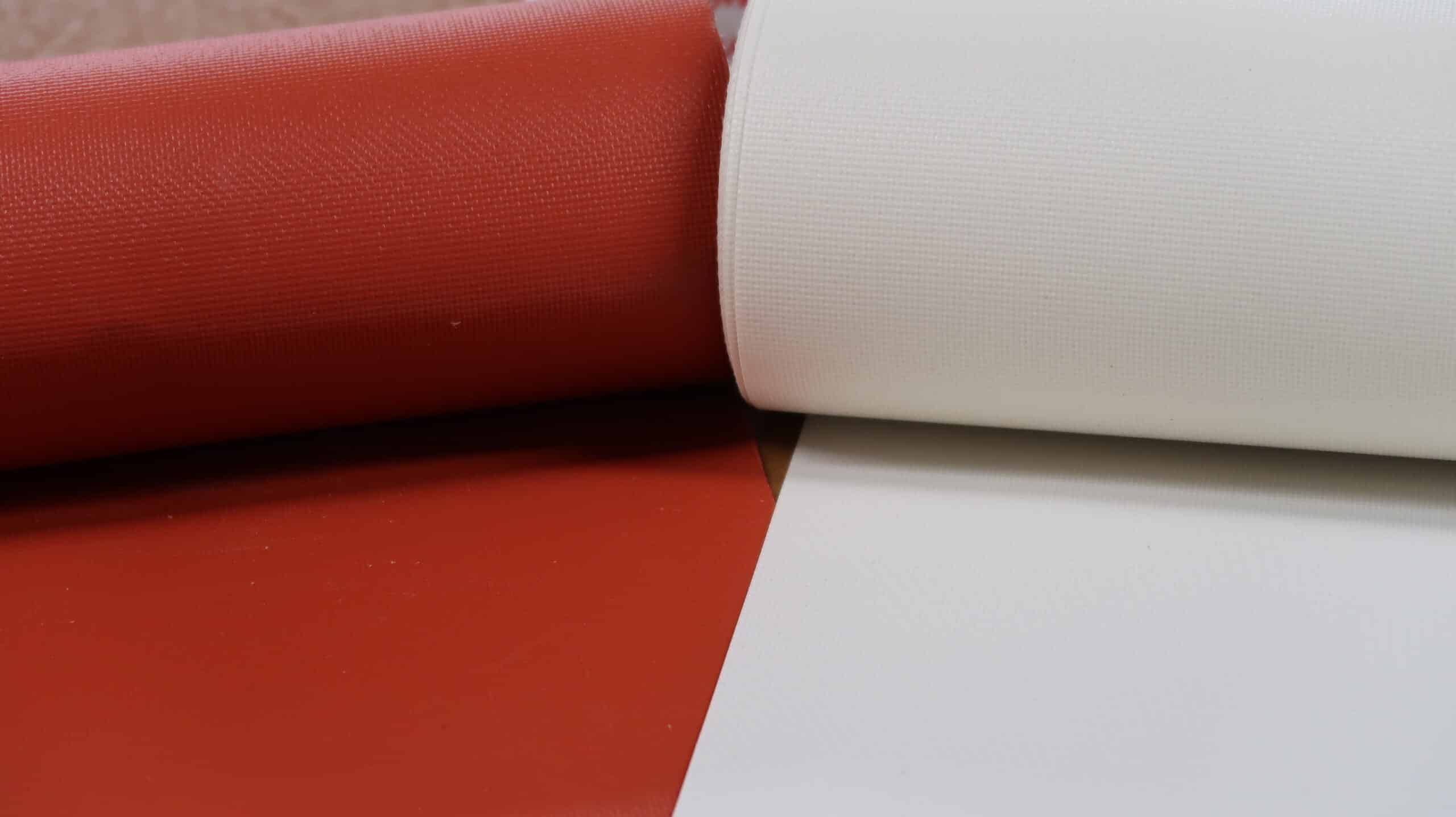
Customers can also choose between white and red colour options, depending on visibility requirements and process preferences. Where required, we can supply custom widths and lengths on request. Our technical sales team supports quoting, logistics coordination, and export documentation when needed.
The material is available under ordering codes SIL-020 and SIL-056. Please reference these codes when placing enquiries or orders.
We operate a streamlined supply process for this product. In most cases, we dispatch orders within 1 to 2 working days following confirmation. This turnaround supports fast maintenance response and minimises operational downtime.
Material Selection and Performance Considerations
When assessing this material for your application, consider the following factors:
Temperature range requirements. Confirm that your operating temperatures remain within the continuous resistance range of approximately 230 °C.
Film adhesion behaviour. If your shrink films soften significantly under heat, prioritise high release performance to avoid stoppages.
Chamber configuration. Match curtain size, thickness, and mounting method to your tunnel design to maximise service life.
Environmental exposure. Chemical vapours, moisture, or aggressive cleaning regimes may influence coating thickness or fabric choice.
Use these criteria to determine suitability and optimise long-term performance.
Heat shrink tunnel curtain material supplied by Techbelt is a purpose-built, high-temperature composite fabric that combines woven glass fibre reinforcement with a durable silicone coating. Together, these components deliver reliable heat resistance, excellent release performance, and strong resistance to abrasion and chemical exposure.
With standard widths, cut-to-size options, and fast dispatch, Techbelt supports a wide range of industrial heat tunnel and thermal curtain applications. When consistent thermal performance and operational reliability matter, this material provides a proven solution.
Why Modern Industries are Turning to Plastic Modular Belts Modern manufacturing and processing environments face persistent challenges in
Timing belts are crucial components in conveyor belt systems and other machinery. They ensure precise synchronisation between the

Wow, what a journey it’s been! We’ve always believed in the power of LinkedIn to help us connect,
